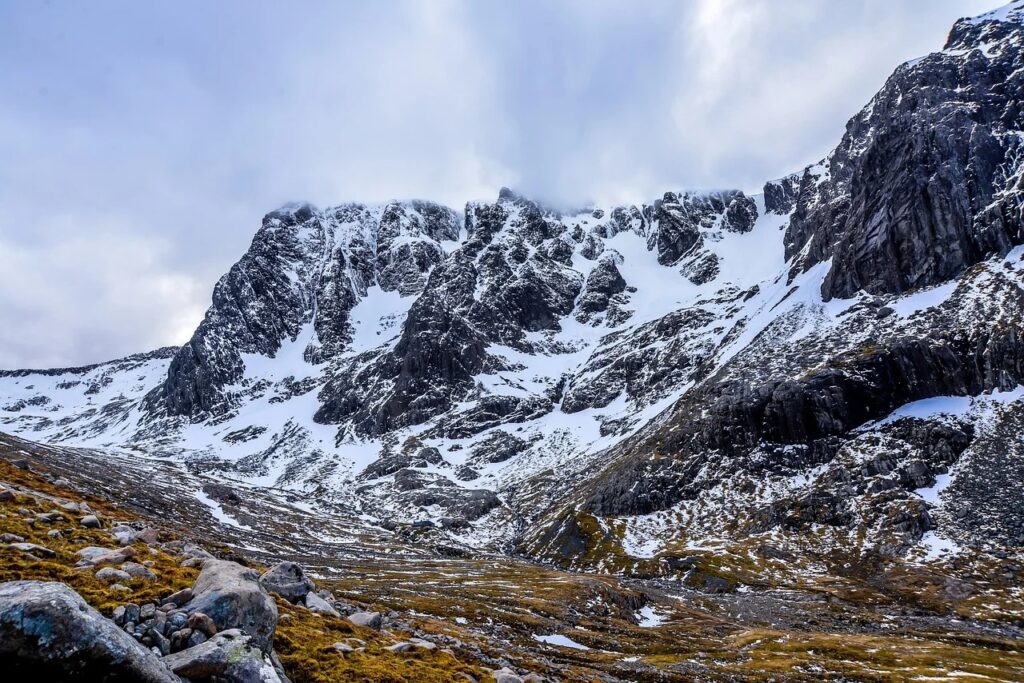
For winter walking in the UK you need the same core kit as summer, plus a few additions. Add warmer layers, a spare pair of gloves, a reliable headtorch and a survival bag or shelter. On icy days, add microspikes too. The big change is not the temperature so much as the daylight. Once the clocks go back, a walk that finished in good light in September can run into dusk by mid-afternoon.
Here is the short version, before I explain the reasoning behind each item:
- Base layer, mid layer and a warm insulated jacket
- Waterproof jacket and waterproof trousers
- Leather walking boots, with gaiters for muddy days
- Hat, plus waterproof gloves or mittens (and a spare pair)
- Headtorch with fresh batteries
- Survival bag or shelter
- Microspikes for icy paths
Affiliate disclosure: This post contains Amazon affiliate links. If you buy through them, I may earn a small commission at no extra cost to you. I only recommend products I’d genuinely use myself.
What winter hiking gear do you actually need in the UK?
The honest answer is less than the outdoor shops would like you to believe. It is also more than you think when you set off from a sunny car park. British winter weather is rarely extreme in the way an Alpine winter is. It is damp, windy and changeable. So the most useful gear keeps you dry, keeps the wind off and lets you add or remove warmth quickly.
If you already carry a sensible kit for the hills, start with The 10 Essentials Every UK Hiker Should Carry. Treat this post as the winter adjustment to it. Navigation, first aid, food and water do not change. What changes is how much insulation and light you carry. You also need to plan for a longer day on the hill than you expected.
How should you layer for winter walking?
Layering works because you can adjust it as you warm up on the climb and cool down at the summit. A base layer sits against your skin and moves sweat away. A mid layer adds warmth, and an outer shell keeps out wind and rain. Avoid cotton next to the skin. Once it is damp from sweat it stays damp, and it chills you quickly when you stop.
On top of that, I carry a down jacket in the rucksack rather than wearing it while I climb. Mine is a Rab Microlight. It earns its place when you stop for lunch, or when the wind finds you on a summit. Then you can throw it on over everything and stay put for ten minutes. It is the layer you put on before you feel cold, not after. Down loses much of its warmth in the wet. Keep it in a dry bag or rucksack liner, and wear your waterproof over the top if it is raining. Synthetic insulation is the more forgiving choice for very wet conditions.
Which waterproofs, boots and gaiters work best in winter?
Your waterproof jacket does double duty in winter as a windproof, so it matters more than it does in July. I wear a Rohan Barricade jacket, and I pair it with Craghoppers waterproof walking trousers. Waterproof trousers feel like overkill on a dry morning. But they keep your legs warm when sleet blows sideways, and they add surprising wind protection on exposed ridges.
For feet, I wear Grisport leather walking boots. Leather boots cope well with cold, wet ground and they are comfortable once you have worn them in. Whatever you choose, try boots on with the thicker socks you will wear in winter. A pair that fits perfectly with thin summer socks can pinch with wool ones. Our walking boots buying guide covers fit and construction in more detail.
Gaiters are the cheap bit of kit that pay for themselves on muddy days. They stop bog water and wet grass soaking your trousers and boot tops. They also keep stones and mud out of your boots. Winter paths in the UK are often more mud than anything else. I would rate gaiters above a lot of fancier purchases.
Do you need a head-torch for winter walks?
Yes, every time, even on a walk you expect to finish by lunchtime. Daylight in midwinter is short. A slow descent, a wrong turn or a twisted ankle can easily turn a morning walk into a dusk finish. A head-torch frees both hands for poles, a map or a handrail, which a phone torch cannot do. It also saves your phone battery for a call or your navigation app.
Check it works before you leave home, and fit fresh batteries or fully charge it. Keep it somewhere you can reach without emptying the rucksack on a windy path. In cold weather batteries lose capacity faster, so carrying a spare set is a cheap bit of insurance.
What should you carry for hands, head and emergencies?
A warm hat and waterproof gloves or mittens are on my list for every winter walk. Hands lose heat quickly, and wet gloves are miserable and ineffective. A spare pair in the rucksack is worth the weight. Mittens are generally warmer than gloves, but gloves give you better dexterity for maps and zips. Many walkers carry a thin pair and a warm pair.
The other item I never leave out is a survival bag or shelter. It weighs very little and takes up almost no space. If someone twists an ankle or the weather turns, it gets you out of the wind and wet quickly. That is one of the most useful things you can do whilst you wait for help. It is the item you hope never to open and would be very glad to have if you did.
Emergency Survival Bag
Emergency Storm Survival Shelter
Are microspikes worth carrying for winter walking?
On cold days where paths hold ice or compacted snow, microspikes make a real difference to confidence underfoot. They are a chain and spike system that stretches over your boots and grips hard-packed snow and ice. They are also light enough to live in your rucksack all winter. I carry mine for exactly that reason. A frozen stretch of path is far less stressful when you can stop, slip them on and carry on.
Be clear about their limits, though. Microspikes are for icy paths and gentler snow, not steep, hard snow slopes or exposed winter ridges. Those need crampons, an ice axe and the skills to use them. If your route needs them, it is a winter mountaineering day, not a walk with spikes. Learn the skills properly first, or go with a qualified guide.
How do you plan a winter walk when the days are shorter?
Plan the walk backwards from sunset. Work out how long the route will take, then add a generous margin for slower ground, snow and breaks. Set a turn-around time that gets you off the high ground before the light goes. To see how I estimate times, start with Naismith’s Rule explained. Allow more than the formula suggests when conditions are poor.
Check the mountain forecast before you go, not just the town forecast. The Met Office mountain forecast and the Mountain Weather Information Service (MWIS) both cover conditions at height. They give you wind speed, cloud base, freezing levels and visibility, which decide most winter walks. Wind chill on a summit can feel dramatically colder than the valley suggests. Carry a map and compass, and know how to use them, because snow and low cloud hide paths quickly. Our guide to learning navigation skills is a good place to build that confidence.
If something goes wrong in the hills, call 999, ask for the Police, then ask for Mountain Rescue. Give them your location, the nature of the problem and the number of people in your party. A full list of the other gear I would recommend is on the recommended gear page.
Frequently asked questions
What is the most important piece of winter hiking gear?
There is no single answer, but a good waterproof shell and warm insulation come close. Staying warm and dry prevents most winter problems. After those, a headtorch and a survival bag are the items that matter most when things go wrong. They are small, light and easy to forget until you need them.
Do I need different boots for winter walking?
Not necessarily. A well-fitting pair of waterproof, supportive walking boots with good grip will do for most UK winter walks. Just make sure there is room for thicker socks. I prefer leather boots for muddy winter walks; I find them easier to clean and keep waterproof. You only need stiffer boots if you plan to use crampons, which belong to winter mountaineering rather than ordinary walking.
When do the clocks go back, and why does it matter for walkers?
The clocks go back on the last Sunday in October, which makes sunset an hour earlier by the clock overnight. From then until spring, daylight shrinks quickly. Start earlier, allow more time and carry a headtorch every time you set out.
Are microspikes the same as crampons?
No. Microspikes have short spikes and suit icy paths, compacted snow and trail walking. Crampons have longer, more aggressive points. You use them with stiffer boots and an ice axe on steep snow and ice, which takes specific training.
Should I walk alone in winter?
You can, but the margin for error is smaller, so be more cautious. Tell someone your route and expected return time, check the mountain forecast and choose a route within your ability. Our guide to staying safe while hiking alone in the mountains goes into this in more detail.
Leave a Reply